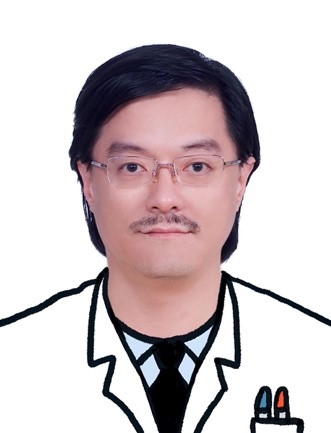
Name
- Chinese Name:葉子成
- English Name :Tzu-Chen Yeh
Education
- MD 1979/07/01- 1986/06/30; Medical School, Taipei Medical College, Taiwan
- PhD 1990/08/01- 1995/06/30; Institute of Biological Sciences, Carnegie Mellon University, U.S.A.
Career and Experience
- Resident/Chief Resident, Department of Radiology, Taichung Veterans General Hospital
- Fellowship/Senior Resident, Department of Radiology, Taipei Veterans General Hospital
- Attending Physician, Integrated Brain Research Unit, Department of Medical Education and Research, Taipei Veterans General Hospital
- Attending Physician, Department of Radiology, Taipei Veterans General Hospital
- Section Director of Magnetic Research Imaging, Department of Radiology, Taipei Veterans General Hospital
- Visiting Scholar, Swartz Center for Computational Neuroscience, San Diego, USA
- Adjunct Assistant Professor, Department of Radiology and Institute of Brain Science, faculty of Medical School, National Yang Ming Chiao Tung University
- Adjunct Assistant Investigator, Division of Medical Engineering, National Health Research Institutes (NHRI)
- Committee Member, Core Laboratory of Functional Micro-Magnetic Resonance Imaging, National Research Program for Genomic Medicine
Medical Expertise
Existing functional MRI/NMR of human and animal brains included many strategies including (1) calcium dynamics by Mn-enhanced MRI, (2) neurotransmitter release by proton-MRS and 13C-MRS (glutamine, glutamate and GABA), (3) activation of receptor by pharmacological MRI, (4) metabolism-hemodynamics by H1-C13 flux, blood-oxygen- level-dependence (BOLD), cerebral blood flow (CBF), cerebral blood volume (CBV), (5) cellular signaling by mapping c-AMP, calmodulin, kinases, etc., (6) gene expression by beta-gal mapping using MRI contrast agents, (7) synatpic strength and synaptic connection by diffusion tensor imaging (DTI) and BOLD fMRI, (8) cell volume change by diffusion (apparent diffusion coefficient) change, (9) cellular tracking as neuronal tracking by MR contrast agents, and (10) multi-modality approaches by simultaneous MRI, EEG(electroencephalogram) /EMG(electromyography) & fMRI; optical image & fMRI.
With integrated works of Taipei Veterans General Hospital and National Yang Ming University, technical implementation of MR-based studies, related to functional MR-based strategies mentioned previously, has been achieved as followings
- optimized BOLD-based fMRI methods using a 3T MRI system (Strategy 4)
- development and validation of functional MRI pulse sequences (Strategy 4)
- imaging analyses of fMRI and computed tomogram (CT) (Strategy 4)
- designs of BOLD-based fMRI studies for clinical applications (Strategy 4)
- studies of baseline brain activities using BOLD-based fMRI (Strategy 4 and 7)
- quantitative proton MRS and multi-nuclear MRS (Strategy 2 and 4)
- multiple-modality approached with BOLD-based fMRI (Strategy 4, 7 and 10)
- in vivo MRI cell tracking (Strategy 9)
- developing carbogen-driven BOLD-based method for evaluating cerebrovascular reserve (Strategy 4)
License
- Diagnostic Radiology (No. 000453) issued by Ministry of Health and Welfare, Republic of China
- Neuroradiology (No. 0206) issued by Ministry of Health and Welfare, Republic of China
Last Modified: