Celebrating Doctor's Day and Commending Excellent Physicians
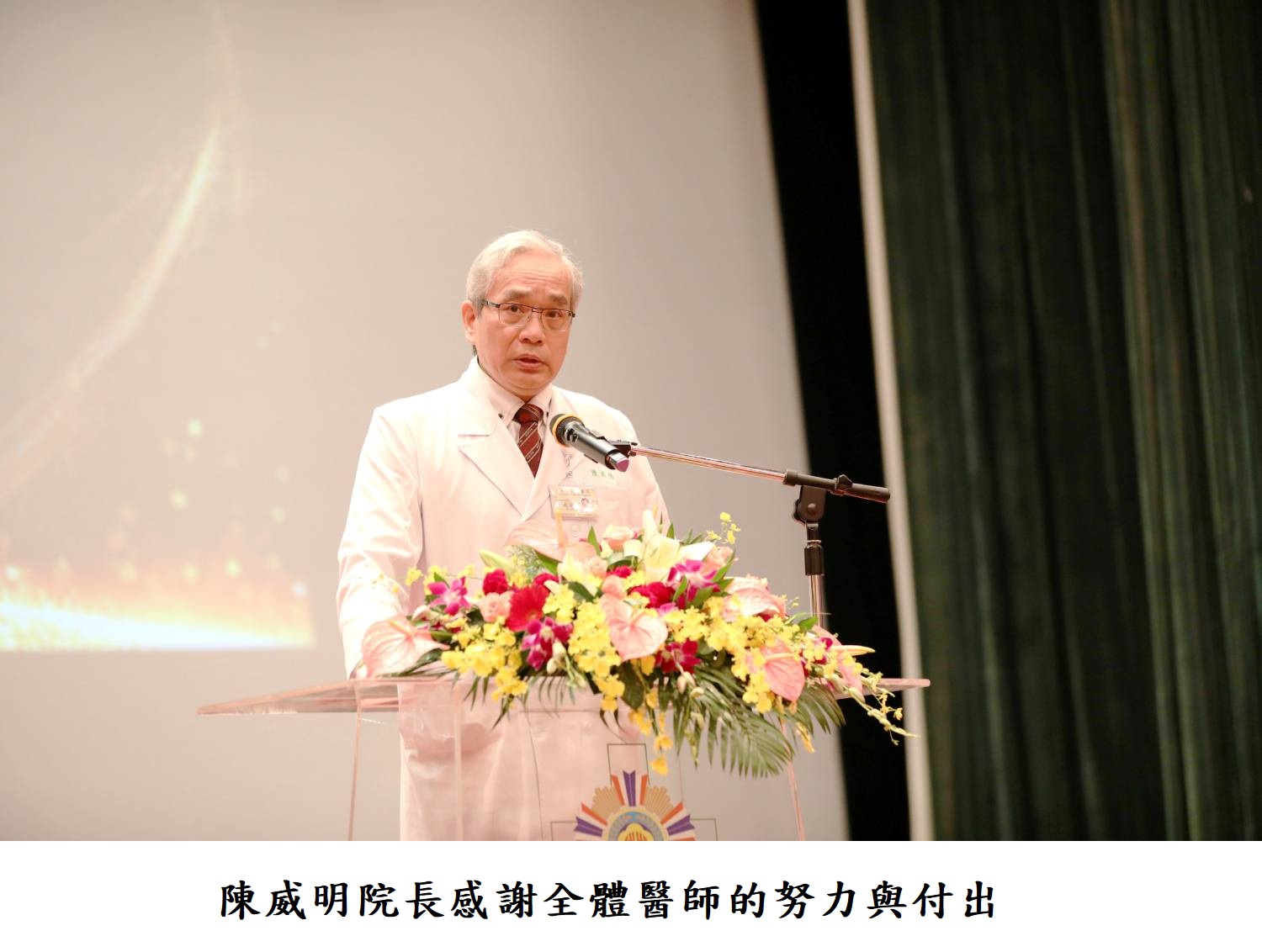
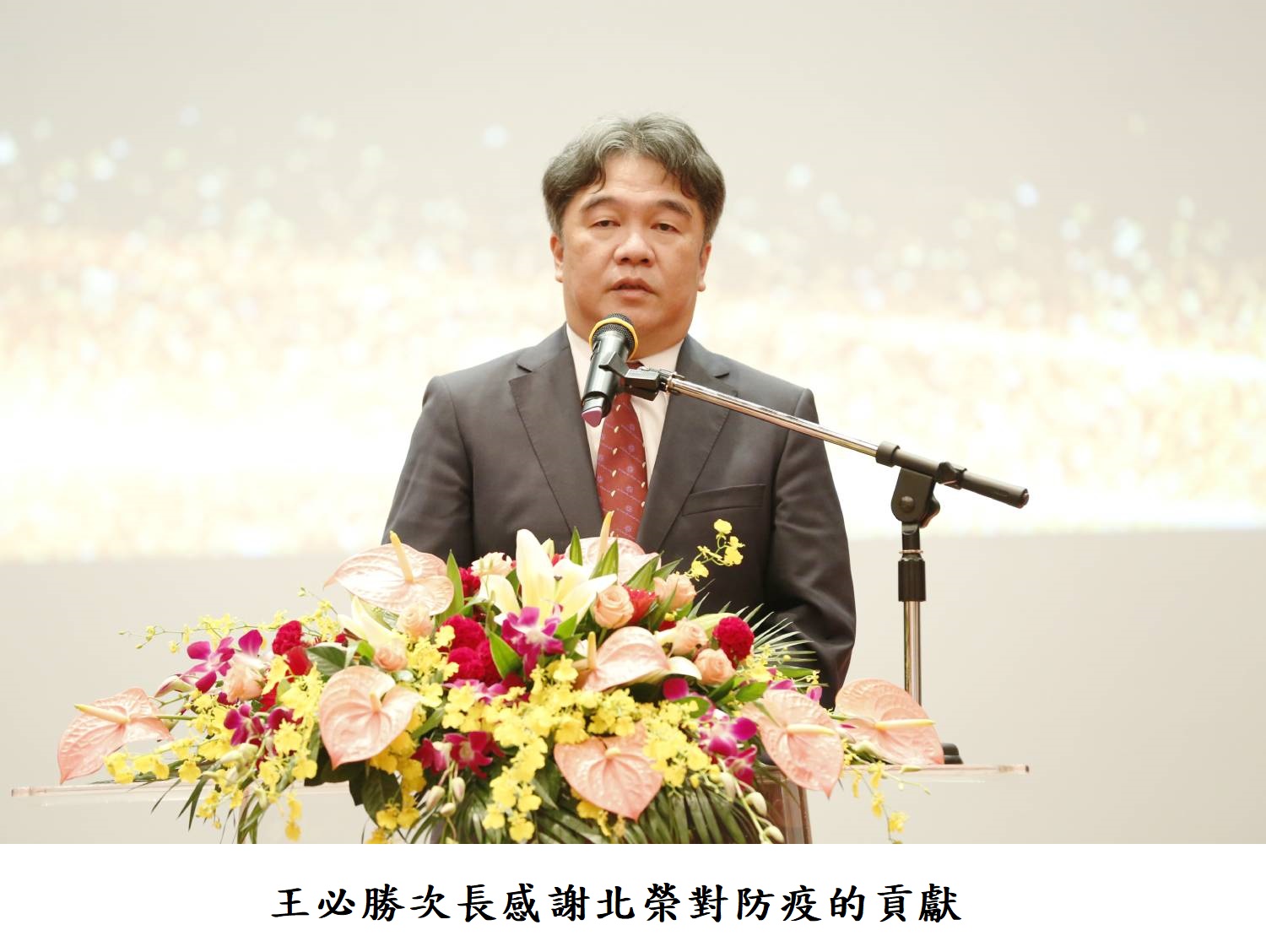
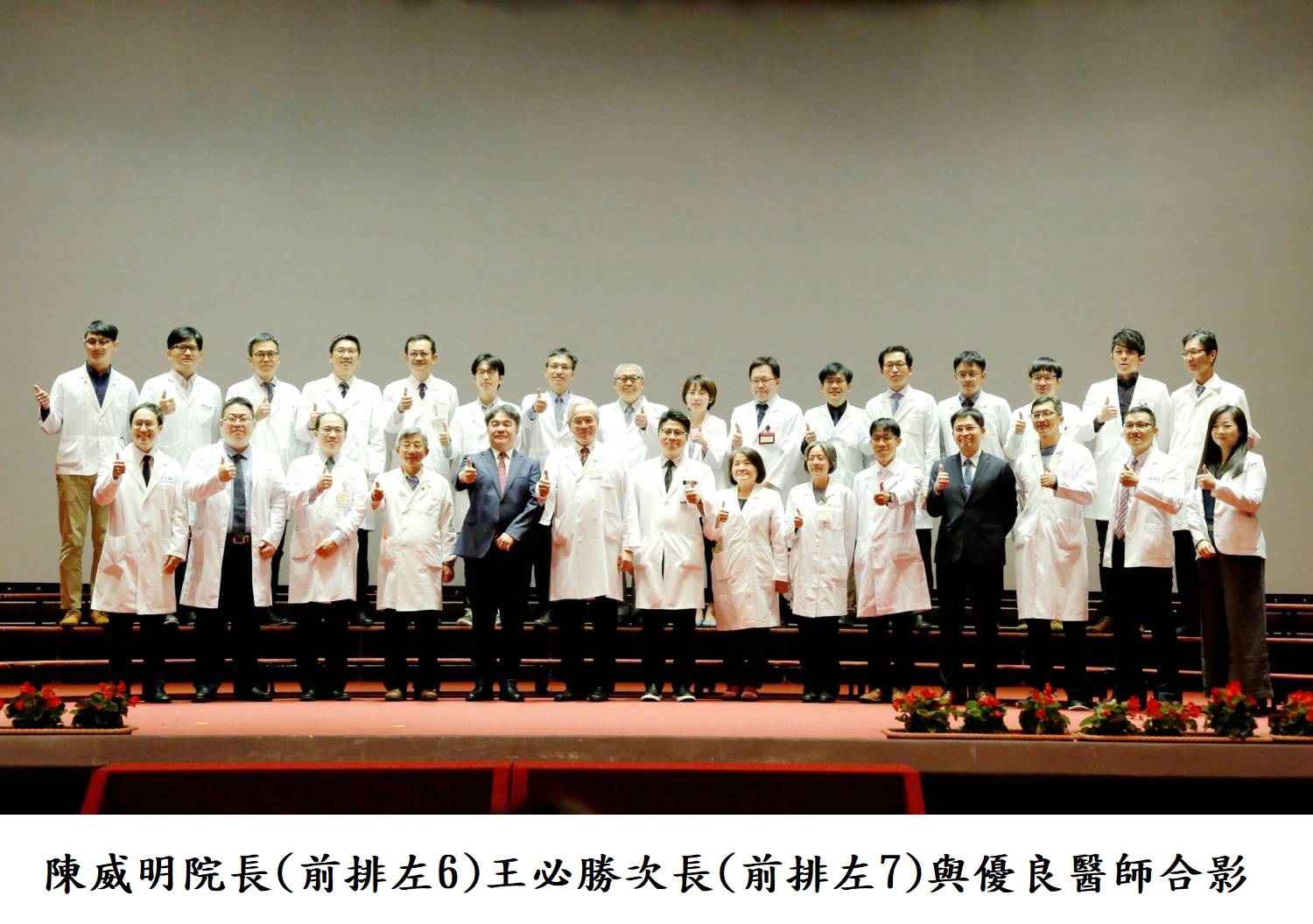
The commendation ceremony for outstanding physicians in the Northern region of the 111th Retired Military Personnel Counseling Committee's medical and care institutions, as well as the Taipei Veterans General Hospital's Doctor's Day celebration, was held at 9:30 am today (11/9) at the Jieshou Hall of the Taipei Veterans General Hospital. It was presided over by President Chen Wei-ming of the Taipei Veterans General Hospital, and Deputy Minister Wang Bi-sheng of the Ministry of Health and Welfare delivered a speech and presented awards.
To improve the level of medical care and service quality, safeguard public health, promote the spirit of universal love, set up medical role models, inspire morale, and encourage medical ethics, Taipei Veterans General Hospital holds an annual commendation ceremony for outstanding physicians. Awards presented at the event include the "Outstanding Physician Award" from the Retired Military Personnel Counseling Committee, the "Medical Education Dedication Award," the "Physician Innovation (Improvement) Award," the "Physician Academic Paper Award," the "Clinically Outstanding Teaching Physician Award," and the "Resident Physician Award." To encourage young and outstanding physicians, two new awards were added this year: the "Outstanding Paper Award for Medical Education and Academic Innovation" and the "Young Dedication Award for Medical Education." The list of award recipients is detailed in the attachment.
Director Chen Wei-Ming expressed his gratitude to all the doctors for their hard work and dedication. He pointed out that since the first COVID-19 patient was admitted to Taiwan on January 11, 2020, it has been more than 1,020 days. Taipei Veterans General Hospital established an epidemic prevention team and opened the largest dedicated bed unit with 512 beds in Taipei City, creating many miracles from Jingyuan Electronics, the three major fruit and vegetable markets in Taipei City, children's rapid screening stations, large-scale nucleic acid testing stations to vaccine administration. After the outbreak of the Omicron epidemic this year, Taipei Veterans General Hospital set up a team to enter the Free Square Carlsberg Inspection Station within one day, and conducted more than 26,000 tests in 23 days. The government and the public praised and appreciated the hospital's efforts. The Taoyuan Branch also administered more than 580,000 doses of vaccines, the highest number in all of Taoyuan. Whether it was the main hospital or the branch, everyone worked together to fight the epidemic and achieved a great victory, maintaining the development of Taiwan's economy.
Deputy Minister of Health and Welfare Wang Bi-Sheng expressed "It's good to be home!" First of all, on behalf of Minister Shih-Chung Hsueh, he thanked Taipei Veterans General Hospital for assisting in the implementation of various important national medical policies before and after the epidemic, and praised the hospital's outstanding achievements in medical treatment, education, and research under the leadership of Director Chen Wei-Ming. He emphasized that Taipei Veterans General Hospital undertakes many tasks of public hospitals, such as medical care in remote areas, international medical care, care for the disadvantaged, and long-term care. Especially in the field of long-term care, the Retired Servicemen's Welfare and Assistance Association has long promoted the concept of "medical care and nursing combined," and the government is implementing it in other systems, extending full-person care for veterans from the early stages to the whole society. It has also become a major feature of the Veterans General Hospital medical system. Having practiced medicine at Taipei Veterans General Hospital for 20 years, he pointed out the differences between the hospital and other medical systems. First is "teamwork," where the main hospital and the branch hospitals work together, combined with the care system, to provide comprehensive care for the people. Secondly, "dare to take responsibility," with a sense of responsibility, starting from the supervisor, everyone is willing to undertake various responsibilities. Finally, "mission accomplished," with the ability and determination to complete all tasks, making it a model for other medical systems. He also took pride in being a part of Taipei Veterans General Hospital in the past.
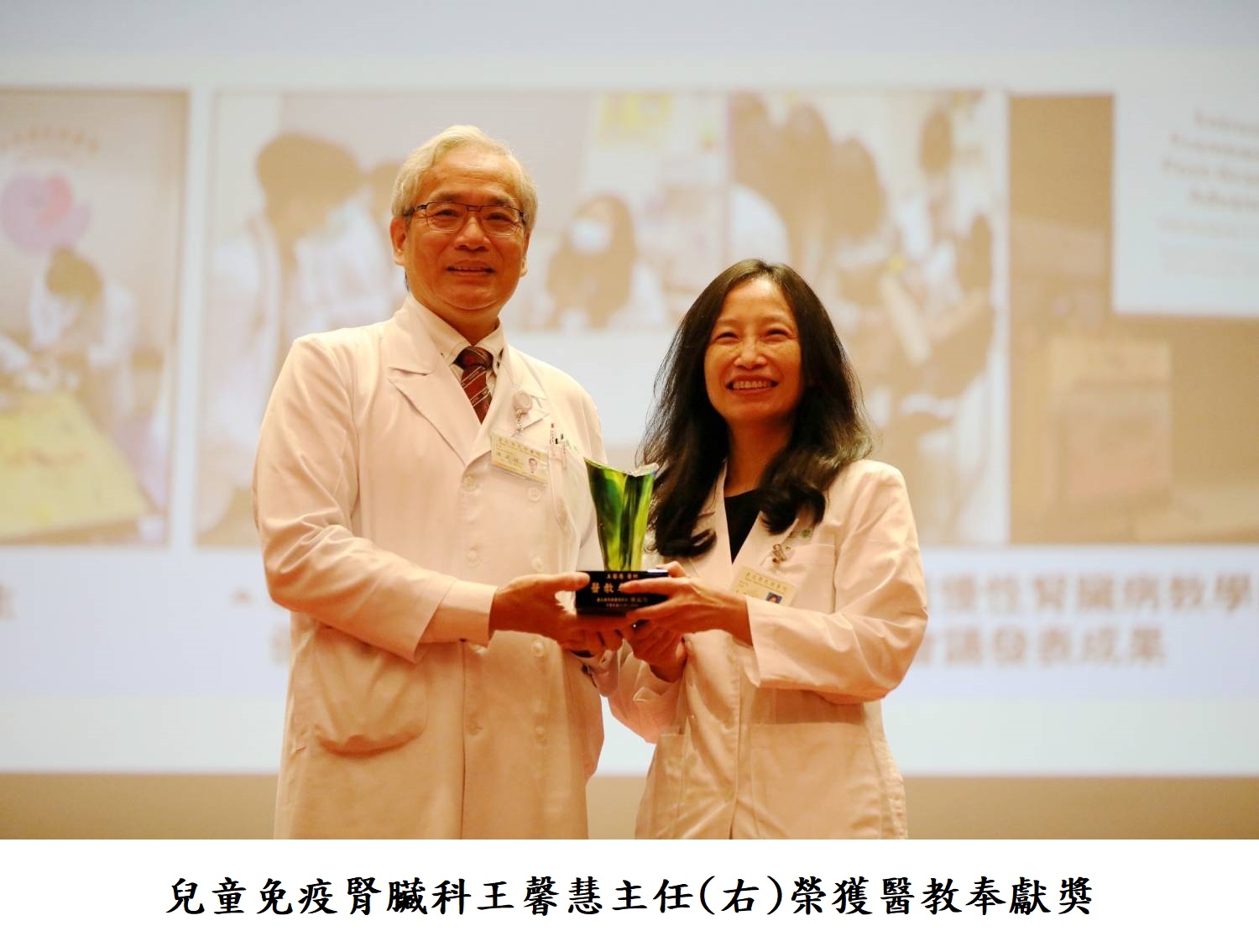
Dr. Wang Hsin-hui, a pediatric immunologist and nephrologist, has been honored with the "Medical Education Dedication Award." She stated that the transmission of medical education includes not only knowledge but also ethics, humanities, and care. She is committed to cultivating students' complete medical capabilities, establishing correct values and attitudes, developing empathy for whole-person care, and fostering innovative medical creativity. By instilling students with passion and empathy for medicine, broadening their perspectives and imaginations, starting with providing patients with warm and high-quality care, and using innovative thinking, she aims to achieve top-notch medical care and help students open a window to the world. During the teaching interaction process, she also opens a window to her own world. Every problem that arises and is resolved, every creative idea, accumulated experience and insights, and connecting with the pulse of the new generation together with students, she grows and progresses.
Dr. Wang Yan-bo, from the Endoscopy Diagnosis and Treatment Center, and Dr. Chen Mu-hung, from the Department of Psychiatry, used the National Health Insurance database to explore the "risk of dementia in Taiwanese patients with inflammatory bowel disease" and won second place in the "Physician Academic Paper Award." Dr. Wang Yan-bo stated that inflammatory bowel disease, including Crohn's disease and ulcerative colitis, is a chronic, recurrent autoimmune intestinal inflammatory disease. This study found that the incidence of dementia in Taiwanese patients with inflammatory bowel disease over the age of 45 was 5.5%, which was higher than the control group without this disease, which was 1.4%. The onset age was younger, with an average of 76.24 years, seven years earlier than the control group, especially in Alzheimer's disease. The trend of high risk of dementia increased significantly with the lengthening of the follow-up period, reaching 2.54 times, which is consistent with the chronic inflammatory nature of inflammatory bowel disease. The brain-gut axis and chronic inflammation may play an important role in progressive cognitive decline and further investigation is needed to explore the relationship between intestinal inflammation and cognitive decline, and develop new treatment methods. For elderly patients with inflammatory bowel disease, attention needs to be paid to cognitive function decline, and early intervention to slow disease progression can greatly improve their quality of life.