Strengthening Human Resources
Faced with the nationwide shortage of nursing personnel and the growing difficulty of recruiting specialist physicians, the Hospital has continued to optimize its clinical infrastructure and working environment while expanding employee benefits. Within the framework of applicable laws and regulations and the Hospital's operational capacity, substantive improvements have also been made to employee compensation. In recent years, night-shift allowances for nurses and on-call payments for physicians, allied health professionals, technical staff, and administrative personnel have been increased, while the salary structure for medical and contractual personnel is reviewed and optimized on a rolling basis. In addition, the Hospital has implemented a range of incentive mechanisms, including increased subsidies for physicians undertaking overseas training and rewards for research publications and innovation, with the aim of creating an outstanding organizational environment that attracts top talent, promotes unity and harmony, and builds a sustainable future together.
Workforce Profile
As of the end of 2025, Taipei Veterans General Hospital (TVGH) employed a total of 7,048 staff members, including physicians, nurses, allied health professionals, technical personnel, and administrative staff, covering both civil-service and contract employees. In addition, 749 research assistants were employed under research projects. The total number of employees has remained generally stable over the past three years. With respect to outsourced personnel, the Hospital has gradually increased its outsourced workforce following its participation in the National Health Insurance Integrated Inpatient Care Service Pilot Program and the planned consolidation of this service with the outsourced Patient Care Attendant Service project in 2026. In 2025, the Hospital had 1,427 outsourced personnel, approximately seven more than in the previous year.
The Hospital bases recruitment and appointment decisions on professional competence and does not discriminate on the basis of race, sex, age, disability, religion, ethnicity, or any other characteristic protected by applicable law. The gender distribution of employees primarily reflects the characteristics of different occupations, with physicians being predominantly male and nurses predominantly female.
Taiwan's declining birth rate, widespread labor shortages, personnel transfers to other government agencies, and the gradual retirement of senior employees in recent years have increased workforce mobility across the Hospital. To address this issue, the Hospital encourages departments to rehire retired healthcare professionals on a selective basis, allowing them to continue working in appropriate roles while passing on their experience. Retirees are also actively encouraged to join volunteer teams in their former departments. In 2025, the Hospital's clinical departments engaged 436 contracted attending physicians, 74 contract half-day outpatient nursing personnel, and 36 other half-day or part-time contract healthcare professionals. Of the Hospital's 831 volunteers, 113 are retired TVGH employees, accounting for approximately 13.5% of all volunteers.
To address shortages of physicians and allied health personnel at TVGH branch hospitals, the Department of Medical Affairs and Planning first evaluates each branch hospital's operating strategy and staffing needs, after which the Department of Personnel assists with the required support arrangements and reporting procedures. In 2025, a total of 12,753 instances of support by physicians, nurses, and other healthcare professionals were provided, facilitating personnel exchange and enhancing the quality of medical services. Information on the Hospital's workforce profile, new hires, and employee turnover is provided below.
Expanding Career Advancement Opportunities
The Hospital recognizes that nurses play an indispensable role in ensuring the stable operation of Taiwan's healthcare system. In response to the severe nationwide nursing shortage, TVGH has actively implemented multiple incentive programs, including contract retention bonuses, early-commitment incentives, and a 'Last Mile' transition incentive for nursing students entering clinical practice. In 2025, the Hospital successfully recruited 275 nurses. Operational data showed that the turnover rate among new employees within their first three months was only 5.78%, while the retention rate reached 94.62%, the best performance recorded in the past five years.
As a public medical center, the Hospital also actively fulfills its social responsibility to advance excellence in nursing education. Over the years, TVGH has established industry-academia partnerships with 21 colleges and universities across northern, central, southern, and eastern Taiwan. These partnerships cover a comprehensive range of practicum areas, including fundamentals of nursing, medical-surgical nursing, maternal and pediatric nursing, clinical career electives, administrative management, and advanced nursing at the graduate level. In 2025, the Hospital hosted 2,304 student-practicum participations, helping build a sustainable foundation for nursing talent development in Taiwan.
The Hospital also provides newly recruited nurses with a stable career pathway. Eligible contract employees who have completed at least four years of service may have the opportunity to be progressively promoted to civil-service positions, providing greater long-term employment and income security. At present, as many as 72% of nurses within the TVGH system hold civil-service status, a proportion that ranks among the highest in Taiwan's healthcare institutions and significantly exceeds that of peer hospitals. The Hospital also strives to move beyond traditional organizational models by promoting outstanding nursing and non-physician professionals to key leadership positions. For example, the vice presidents of both Guandu Hospital and Yuanshan Branch are currently senior nurses, demonstrating the Hospital's substantive recognition of professional diversity and multidisciplinary leadership.
Compensation Adjustments
The Hospital places strong emphasis on attracting, utilizing, developing, and retaining talent. To support sustainable operations and enhance service quality, TVGH provides market-competitive compensation and comprehensive employee benefits. Salary standards are established with reference to central government regulations, market conditions in the healthcare sector, and local living standards, and are reviewed regularly. Employee compensation is not affected by sex, race, language, religion, age, political affiliation, marital status, or other such characteristics.
Employee compensation consists of base salary, various bonuses, care allowances, retention bonuses, and other payments. Annual salary adjustments may be made based on operating conditions, while performance-based bonuses may also be awarded according to employee performance within individual departments, thereby motivating employees and encouraging talent to grow together with the Hospital. Base salaries for comparable positions do not differ by gender, and starting salaries are equal for women and men. However, total compensation, including base salary, bonuses, and allowances, may vary according to seniority, experience, or position-related allowances. In 2025, the ratio of standard entry-level wages for male and female employees was 1:1, and the ratio of the Hospital's standard entry-level wage to Taiwan's statutory minimum wage was 1.17. Information on the ratios of women's to men's base salaries and remuneration is disclosed in the relevant sustainability performance data.
TVGH recognizes healthcare professionals as a core driving force behind sustainable operations. In support of the government's Healthy Taiwan policy, the Hospital formally launched the third phase of its incentive adjustment program in April 2025, building on salary adjustments implemented from 2023 to 2024 and further strengthening the professionalism and fairness of its compensation structure. Whereas the first and second phases in 2024 focused primarily on broad-based salary improvements, the third phase in 2025 emphasized the principle of fair differentiation in pay based on differences in job duties and responsibilities. Additional structural incentives were targeted at high-risk and high-pressure specialties and units, including internal medicine, surgery, obstetrics and gynecology, pediatrics, emergency medicine, and critical care, to ensure that professional value is appropriately recognized and rewarded.
Using self-generated hospital funds outside the existing civil-service salary framework, TVGH substantially increased night-shift, surgical, and special-duty allowances for frontline healthcare workers. Building on the monthly NT$6,000 allowance introduced in 2024 for surgical departments and resident physicians, the Hospital further optimized its occupational allowance structure in 2025 and adopted differentiated bonus mechanisms to support targeted retention. Compensation for nighttime duties was also enhanced, with the Hospital fully funding incentive payments for nighttime deliveries and surgical procedures. For example, the delivery allowance for attending obstetricians and gynecologists was adjusted to NT$4,000 for evening shifts and NT$6,000 for overnight shifts. The program moves beyond the traditionally rigid compensation structure of public hospitals by significantly increasing incentives for specific special duties and fully funding these payments, thereby reducing the burden on employees and strengthening protection of healthcare workers' labor rights.
| Benefits for Full-Time and Part-Time Employees (Excluding Research Assistants) |
| Insurance Coverage | In addition to civil-service, labor, and National Health Insurance coverage, the Hospital provides comprehensive group insurance for employees, including life insurance, cancer insurance, accident insurance, and inpatient medical insurance. Employees' dependents may also participate at their own expense in Hospital-arranged life, medical, disability, and group accident insurance plans. |
| Employee Health Management | Employees receive medical consultation discounts or subsidies and regular annual health examinations. In addition to statutory examination items, additional health checks are arranged according to employee level and job characteristics, with health-promotion activities provided for employees with identified health concerns. |
| Diverse Employee Activities | The Hospital organizes a wide range of activities, including master lectures, movie screenings, social events for unmarried employees, an NT$1,000 per-person subsidy for year-end gatherings, and subsidies for holiday activities for different occupational groups, helping employees maintain physical and mental well-being outside of work. |
| Employee Clubs | The Hospital has long subsidized employee club activities. There are currently 26 voluntarily organized employee clubs, providing opportunities for employees to build relationships and enrich their physical and mental well-being. |
| Education and Professional Development Subsidies | Employees are encouraged to pursue continuing education. Benefits include official leave for study at domestic colleges and universities, subsidies for foreign-language proficiency examinations, official leave and public funding, support for presenting papers overseas, medical technology training, and grants for domestic professional development. |
| Other Benefits | Other benefits include birthday gifts, childbirth gifts, children's education subsidies for public-sector employees, and childbirth subsidies. Senior employees are publicly recognized and presented with certificates, while outstanding contract and labor-grade employees are selected for recognition and encouragement. |
Empowerment and Growth
In response to rapid changes in the healthcare environment, the Hospital has established a comprehensive talent development and smart-learning support system to promote continuous employee development. At the same time, TVGH places strong emphasis on cross-team collaboration and organization-wide operational synergy, enabling professional knowledge, clinical skills, and practical experience to be transferred and disseminated efficiently. These efforts not only sustain the Hospital's capacity for innovation but also provide a strong foundation for high-quality healthcare services, putting into practice TVGH's core values of treating patients like family, pursuing excellence, adhering to ethics, and complying with laws and maintaining trust.
Professional Training and Assessment
Within three months of recruitment or appointment, new employees receive training on employee rights, occupational safety regulations, the Labor Standards Act, and other relevant requirements. Throughout the talent development process, the Hospital continuously assesses organizational and individual needs, reviews training requirements on an ongoing basis, and progressively provides the essential training needed to strengthen employees' knowledge and skills for career development.
Professional talent development is implemented systematically in alignment with the Hospital's strategic priorities. Each year, the Department of Personnel issues an annual education and training implementation plan specifying the types of training, target participants, objectives, and responsible units. It also works with the relevant professional departments to review and revise training plans for each occupational category, with the aim of cultivating specialized talent through diverse learning methods. Employees are required to complete at least 15 hours of administrative training or at least 18 hours of healthcare-related training each year. In addition, all employees, including outsourced personnel, must complete three hours of infection control and communicable disease training annually, with a target compliance rate of at least 90%. Training content includes common courses, hospital accreditation courses, and other healthcare or management-related programs.
For healthcare professional development, the Department of Medical Education formulates and coordinates the Implementation Plan for Clinical Medical Education and Research Development, providing physicians, nurses, and allied health professionals with sufficient educational resources. Further details are provided in Section 3.1, Medical Education and Research. Statistics on employee training are available in the Appendix: Sustainability Performance.
Continuing Education and Professional Development
In today's rapidly evolving healthcare environment, emerging evidence from medical research, advanced technologies, and new treatment strategies continually challenge and refine existing knowledge, keeping clinical practice in a state of constant development. Accordingly, the Hospital places Evidence-Based Medicine (EBM) at the core of both pre-employment training and continuing professional development. Healthcare professionals are guided to continuously collect, critically evaluate, and integrate the latest research evidence and combine it with extensive clinical experience and patients' needs, translating evidence into timely and precise clinical decisions.
At present, the Hospital's attending physicians and chief residents possess a strong foundation in evidence-based medicine and are able to guide residents and medical interns through key steps such as Ask, Acquire, and Apply. Clinical faculty members are also required to receive regular advanced EBM training to deepen their practical experience in Appraise and Audit, maintain close awareness of the latest global scientific developments, and further strengthen research and innovation capacity. In addition to regularly organizing related benchmark courses and competitions, the Department of Medical Education has established an Interactive Knowledge Platform for Evidence-Based Medicine Education and Research. The platform integrates functions such as intelligent literature searching, evidence appraisal, and clinical case analysis, enabling employees' learning outcomes to be comprehensively retained in digital form and accumulated systematically as organizational knowledge.
 |
| Interactive Network for Evidence-Based Medicine Education and Research |
Nursing education is planned and implemented by the Department of Nursing and includes clinical practicums for nursing students, training for newly hired nurses, continuing education, advanced clinical nursing specialty training, nursing research capacity development, domestic and international academic exchange, and succession development for nursing leaders and future nursing managers. Through a nursing competency milestone advancement system, the Hospital supports the professional growth of frontline nursing personnel. In 2025, advanced continuing education programs recorded 2,645 participations in in-person courses and 20,634 participations in digital courses. In addition, 114 employees were pursuing master's or doctoral degrees while employed. Within the Department of Nursing, 364 nurses currently hold master's degrees and 16 hold doctoral degrees. A total of 151 nurses hold Ministry of Education-recognized faculty appointments, including 10 assistant professors and 141 lecturers, reflecting the strong recognition of their teaching competence and academic expertise by educational institutions.
Promoting Work-Life Balance
The Hospital places great importance on employees' physical and psychological well-being in the high-pressure healthcare environment. By establishing supportive systems and a friendly workplace, TVGH seeks to reduce excessive workload and the risk of occupational burnout among healthcare professionals while simultaneously improving job satisfaction and employees' willingness to remain with the organization. These efforts support the long-term stability of the Hospital's workforce and provide an essential foundation for high-quality healthcare.
Supporting Employees in Parenthood
To support employees in developing their careers at TVGH while also meeting family responsibilities, the Hospital provides family care leave, paternity leave, parental leave without pay, and other forms of leave for employees caring for young children. When employees apply to return to work, priority is given to reinstatement in their original department and position, providing greater career stability. Female employees are also entitled to menstrual leave and pregnancy-related bed-rest leave, helping them achieve a better balance between work and personal life and demonstrating the Hospital's respect for employees' diverse needs. In line with the government's amendment to the Regulations Governing Leave-Taking of Civil Servants, mental health adjustment leave was also introduced; 27 employees applied for this leave in 2025.
In support of the government's family and childbirth policies, the Hospital provides childbirth subsidies to reduce employees' medical expenses and encourages employees to give birth at the Hospital. Each eligible employee receives an NT$2,000 childbirth gift payment and a gift box valued at NT$500. Civil-service employees are additionally eligible for marriage, bereavement, and childbirth subsidies as well as children's education subsidies. Contract employees, including frontline contract nurses and contract pharmacists, may also receive an additional monthly care allowance of NT$5,000 and a retention bonus of NT$22,000, among other benefits.
Under the TVGH Medical Care Benefits for Employees and Dependents program, employees, their parents, spouses, and minor children are exempt from registration fees. Additional benefits include a 50% subsidy for the National Health Insurance copayment difference for a two-bed room when an employee's spouse gives birth, or a subsidy of up to NT$3,000 per day for the copayment difference for a private room. As a result, the proportion of employees giving birth at the Hospital increased markedly from 65% in 2022 and has remained above 75% each year since then. Even in the context of Taiwan's low birth rate, the number of employee deliveries has risen to a recent high, demonstrating both the effectiveness of these support measures and the Hospital's commitment to social responsibility.
Among hospitals in the surrounding area, TVGH is currently the only hospital with an affiliated kindergarten. The Hospital's Rong-Guang Kindergarten provides childcare and early childhood education services for employees' children aged 2 to 6, enabling employees to work with greater peace of mind and focus on patient care. To accommodate employees' working hours, regular childcare services are provided from 08:00 to 17:30 each day, with extended care available from 07:35 to 08:00 and from 17:31 to 18:30. The Hospital is committed to providing a childcare environment in which parents can feel confident, and parental satisfaction has continued to increase year after year.
TVGH has also entered into a workplace mutual-support childcare arrangement with the First Special Police Corps of the National Police Agency, Ministry of the Interior, in the Shipai area, giving priority to childcare services for children aged 2 to 6 of Hospital employees. For infant care, the Hospital has agreements with a total of 13 childcare centers - nine in Taipei City and four in New Taipei City - all of which have received at least a Grade A rating, including centers rated Excellent. These centers provide benefits such as reduced tuition and miscellaneous fees and complimentary gifts, creating a flexible and convenient multi-site childcare support network that allows employees to select the location best suited to their needs.
.jpg) |
| Rong-Guang Kindergarten |
Quality Living Conditions
With the support of President Yin of Ruentex Group, all single-occupancy staff dormitories at TVGH have been newly constructed or renovated, providing accommodation for a total of 2,390 people. The new healthcare staff dormitory building began phased operation in 2024; following the move-in of nurses, male resident physicians also began moving in during mid-2025. The Hospital additionally provides 663 multi-room staff housing units, enabling more healthcare professionals to live on campus, obtain sufficient rest, and commute to work with greater convenience and peace of mind. The high-quality accommodation also helps attract leading experts and scholars from around the world to teach and lecture at TVGH, supporting the Hospital's continued advancement in medical care.
To address the shortage of parking spaces on campus, the former nursing dormitories in Buildings A, B, and C were demolished after nurses moved into the new healthcare staff dormitory and were replaced with a landscaped surface parking lot, which officially opened in 2025. The Hospital campus now provides 2,724 automobile parking spaces, of which 1,436 spaces (52%) are allocated to employees, as well as 1,496 motorcycle parking spaces, of which 1,007 spaces (67%) are available for employee use.
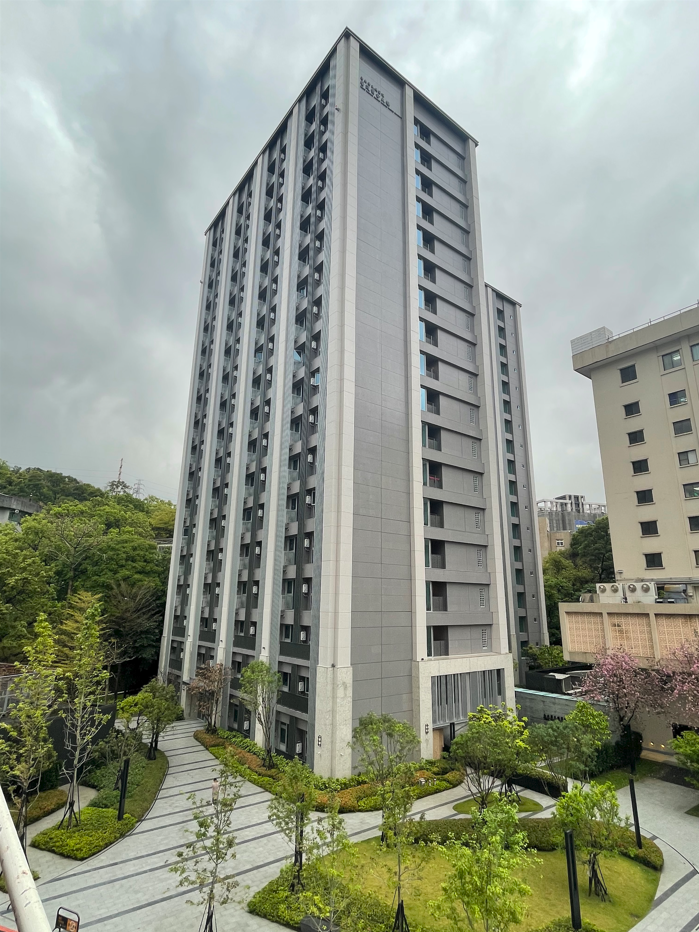 |
| New Healthcare Staff Dormitory Building |
Following renovation made possible by generous donations from various sectors, TVGH's fitness center, Xiaowei Hall, has become one of the largest and highest-quality sports facilities among medical centers in Taiwan. It is available to Hospital employees free of charge and includes an indoor basketball court, badminton courts, a fitness center, an aerobics and yoga studio, a table tennis room, three outdoor tennis courts, a standard swimming pool, and other exercise spaces. These facilities not only support employees' physical fitness but also help relieve work-related stress.
TVGH recognizes the importance of helping employees maintain a healthy work-life balance. To promote physical, psychological, and social well-being, the Social Work Office has long provided subsidies to 26 employee-organized clubs. Together with the high-quality facilities at Xiaowei Hall, these clubs give employees opportunities to build relationships, pursue interests, and enhance well-being. To encourage more employees to develop regular exercise habits, the Hospital organizes a wider range of health-promotion activities than many other medical centers and regional hospitals. The Occupational Safety and Health Office conducts muscle-gain and fat-loss programs two to three times each year, as well as hospital-wide walking programs. Depending on the nature of the program, each session lasts approximately 4 to 12 weeks, with prizes ranging from NT$100 to NT$3,000 provided according to the activity.
Last Modified: