Healthcare Risk Monitoring
TVGH upholds the patient-centered principle. Through the establishment of the healthcare quality and patient safety plan, we perform tasks involving warning systems, medication management, medical adverse event reporting, etc. We also carry out inspection operations such as indicator monitoring, internal audit visits, and continuous improvement of PDCA model management to create a safe and secure healthcare environment for patients.
.png)
Annual Work Plan and Monitoring
TVGH develops an annual work plan through the Healthcare Quality and Patient Safety Review Committee meeting and adheres closely to the hospital accreditation regulations and the Ministry of Health and Welfare’s nine annual patient safety goals (PSGs). Through rigorous discussions among internal and external committee members, key performance indicators (KPIs) for medical quality and patient safety were established, with the scope covering inpatient mortality rate, 14-day unplanned readmission, and unplanned return to the operating room for all surgical patients during hospitalization. If any indicator falls below the defined thresholds set by the Hospital, the root cause analysis and quality control improvement mechanism will be initiated immediately.
In terms of routine monitoring, the Hospital is comprehensively monitored and evaluated with four major indicators, including “Hospital Accreditation Continuous Monitoring Indicator”, “Taiwan Clinical Performance Indicator (TCPI)”, “Departmental Medical Quality Indicators”, and “Medical Quality Monthly Report Indicator”. The Center for Quality Management implements dynamic evaluation and lean management. For underperforming indicators identified during the monitoring process, the Center for Quality Management will make appropriate intervention, guides and assist relevant units in implementing core improvement measures to continuously improve medical quality and ensure that patients enjoy the highest quality and safest medical care.
.png) |
| Indicator Monitoring Process |
Take the Taiwan Clinical Performance Indicator (TCPI) as an example, the Dynamic Indicators Information Platform monitors a total of 291 indicators, collects data for statistical analysis, and provides data for a review in the Healthcare Quality and Patient Safety Review Committee meeting and comparative analysis with peer medical centers. Department heads can conduct daily management through the dynamic indicator information platform and review as well as improve underperforming indicators. If no improvement is observed, a comprehensive quality improvement plan will be initiated, and a project report shall be presented to the committee.
Early Warning Mechanism and Incident Reporting
The Hospital has established an Early Warning System (EWS) to detect and respond to potential and ongoing adverse medical events. Inpatients are monitored and a critical condition warning system query webpage has been established. Users can select wards, departments, or medical record number for query, and data are displayed in different colors based on the level of risks to remind the medical team to pay more attention, thereby effectively reducing the occurrence of unexpected emergency incidents.
 |
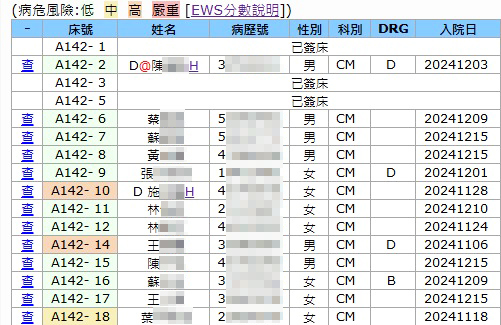 |
| Risk levels of the Early Warning System (EWS) | Applying the EWS to differentiate patient lists by different colors based on the risk levels |
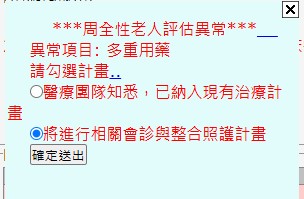
In addition, to improve the quality of care for elderly patients, the Electronic Medical Record (eMR) system has established a “comprehensive assessment alert” as the basis for the treatment plans for the elderly patients. The system will actively provide warning messages for elderly patients with multiple diseases or physical and mental disabilities (or patients with multiple geriatric syndromes). The care team can review the assessment results as the basis for the planning of the treatment, and follow-up visits and referrals will be arranged based on the patient’s condition and needs.
 |
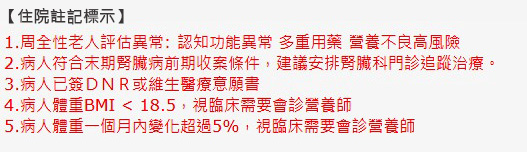 |
| Automated alert system for abnormal findings in the comprehensive assessment – reminder to the medical team for proper management and referral | Automated alert system for abnormal findings in the comprehensive assessment –Annotation for inpatients |
The Hospital has established comprehensive standard operating procedures (SOPs), preventive mechanisms, and response measures for a wide range of potential medical adverse events, including workplace violence, suicide or self-harm risk, patient transport, in-hospital emergency resuscitation, medication management, surgical safety, laboratory and blood transfusion errors, and fall prevention. To actively foster a just culture that encourages proactive reporting of patient safety events, with the principle of non-punishment for departments or personnel involved in the incident, the Hospital has established a reporting incentive policy that adheres to the principles of focusing on the principles of addressing issues rather than assigning personal blame and exempting the involved departments from punitive action, with the goal of comprehensively improving the safety of patient care and the workplace.
In terms of compliance with regulations, the Hospital strictly adheres to national medical laws and regulations and uploads patient safety data to the Taiwan Patient-Safety Reporting System (TPRS) on a monthly basis. Incidents falling within the scope of major medical events will be reported as required by law. Based on the Hospital statistics, no violations of relevant healthcare regulations occurred throughout the Hospital in 2025.
For critical cases (including alert incidents) classified as Level 1 or Level 2 of the 2025 Severity Assessment Code (SAC) matrix, in addition to completing the required reporting procedures, the Quality Management Center implemented comprehensive monitoring and tracking. By the end of that year, all cases under management had completed a "Root Cause Analysis (RCA) meeting" with the unit where the incident occurred or across departments, and systematic improvement measures had been implemented to achieve a closed-loop quality management system for the prevention of the recurrence of such incidents.
Medication Safety
The Hospital has established Regulations for Medication Safety Quality Improvement Operations, clearly stipulating the handling procedures for adverse drug reaction cases. A Medication Safety Assessment Team has been established to hold meetings on a quarterly basis to review cases scoring 6 points and above in the Adverse Drug Reaction Probability Scale (Naranjo Scale), patient-filed adverse drug reaction cases, or clinically significant adverse drug reaction cases, and the reviewed and confirmed cases by the team will be reported to Taiwan National Adverse Drug Reaction Reporting Center as required by law. The Hospital reported 60 adverse drug reaction cases in total in 2025. The reported cases were reviewed for appropriateness based on the medical records, and a total of 14 cases were brought to the meeting for in-depth discussion, and 14 cases were reported to Taiwan National Adverse Drug Reaction Reporting Center. In addition, the medical order system has fully adopted a preventive mechanism for automatic screening of drug allergies and adverse reactions during prescription processing for the physicians to note the relevance, severity (mild, moderate, severe), and prescription control (warning or interception) of adverse drug reactions in the electronic medical records, allowing the system to automatically check the next time a prescription is issued to prevent recurrence of adverse reactions. In 2025, the system efficiently issued 1,634 warnings and made 135 forcible interceptions.
In addition, in terms of medication negligence, TVGH collects medication negligence-related cases to precisely detect avoidable risk factors for negligence in the medication process and formulates systematic root cause improvement strategies. The Hospital has developed rigorous management procedures to reduce errors and the near misses. When a medication error or irregularity is identified, medical personnel are obligated to report the incident to the TPRS (Taiwan Patient-safety Reporting System) without penalty. In 2025, a total of 2,204 cases were reported, and among them, there were 2,201 near misses (accounting for 99.9%), effectively preventing errors at the early stages of clinical processes. There were only 3 non-near misses, and the cases were mainly Level 4 (low risk), and Level 3 (moderate risk) in the Severity Assessment Code (SAC) matrix, of which Level 4 accounted for 98.9% while Level 3 accounted for 1.1% of all reported cases. There were no cases of Level 1 or Level 2, demonstrating excellent clinical resilience.
Regarding the medication bag labeling and compliance with drug use regulations, TVGH medication bags provide clear and complete medical information to fully implement 13 legally mandated labeling items (including basic information of patient, medication attributes, dosage and usage instruction, dispensing institution information, and precautions), and 3 forward-looking recommended labeling items (main indications, major side effects, and other medication-related instructions). There were no violations of regulations related to product and service information labeling and marketing promotion in 2025. In addition, all drug applications strictly comply with the regulations listed in Taiwan’s Regulations for Registration of Medicinal Products, and are published in accordance with the approval of the central health authority. From January to December 2025, there were 85 drug applications, and each item underwent a 100% rigorous compliance assessment.
Continuous Service Improvement
To continuously improve the overall quality of healthcare services and comprehensively optimize the patient experience, the Hospital has established a highly resilient lean management system with closed-loop and traceable management mechanisms. Through intelligent data analytics and cross-departmental lean collaboration, the Hospital transforms stakeholder feedback into tangible quality improvement measures to respond to rapid changes in medical needs and the external environment, safeguard healthcare quality, and fulfill its commitment to sustainable operation.
Internal Audits and Questionnaire Surveys
Starting from 2016, the Hospital has regularly carried out on-site visits to the invasive examination room. In October 2021, the Internal Audit Team was officially established, and an annual Internal Audit Plan was formulated based on the core Patient Journey Model. An internal audit visit is conducted annually, and the audit findings are provided to the relevant units for improvement planning. The effectiveness of the improvement is tracked in the Healthcare Quality and Patient Safety Review Committee meeting for the implementation of a management and assessment mechanism to build a closed loop for continuous quality improvement.
The Hospital has independently designed the inpatient and outpatient experience questionnaires based on the “Inpatient Experience Survey” from the Medical Quality Policy Office of the Ministry of Health and Welfare for the comprehensive annual inpatient and outpatient experience survey. After data collection and analysis, the results are disclosed on the hospital announcement website and provided to departments to serve as a basis for improvements. Items identified as underperforming, regressing, or frequently mentioned in open-ended survey responses will be assigned to the responsible units for review and the development of specific improvement plans. In addition, the survey results are reported in the Healthcare Quality and Patient Safety Review Committee meeting, and improvements are also tracked. The Emergency Department also conducts sampled satisfaction surveys on emergency patients on a daily basis, and a specialist is in charge of compiling and analyzing the survey data on a monthly basis to transform real-time patient feedback into a continuous basis for ongoing refinement of daily healthcare services.
Optimization of the Healthcare Environment
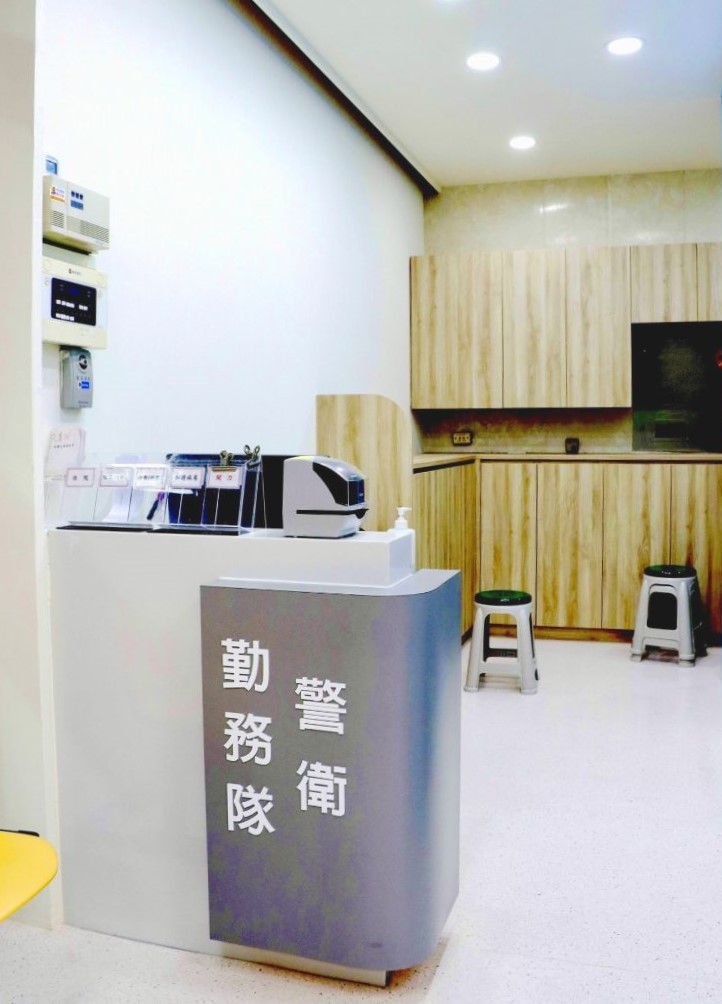
The Hospital actively identifies and responds to the diverse needs of patients and their families by providing high-quality, compassionate, and patient-centered healthcare services. Following the renovation of the Emergency Department’s Epidemic Prevention Screening Station into an Emergency Department Family Rest Area in 2024 to provide family members with a supportive environment for stress relief and emotional well-being, in 2025, TVGH received generous charitable contributions once again to support the completion of the Emergency Department Entrance Renovation Project.
This renovation project significantly widened the entrance access area, creating a more spacious, secure, and patient-friendly healthcare environment. This renovation not only substantially improves accessibility for patients and their families, but also effectively alleviates the congestion caused by the overlapping routes for emergency and non-emergency patients. In addition, the new flow also enhances emergency triage management and response capabilities in the event of a large number of injuries, further improving the overall quality of emergency medical care and environmental safety.
 |
 |
| Expansion of the Emergency Department access pathway to optimize patient flow | Emergency Department Family Rest Area |
For many years, our hospital has been committed to promoting a birth-friendly environment. The Hospital has continuously optimized its healthcare facilities and care system, and the benefits are becoming increasingly evident. As a result, more and more staff members have chosen to give birth at the Hospital with peace of mind. Thanks to the generous donations from all sectors of society, the renovation of the A081 ward of the Department of Obstetrics and Gynecology was successfully completed, creating a safer, more compassionate, and comfortable healing environment for mothers, newborns, and their families. In addition to completely updating the bathroom facilities in the wards and single labor rooms, this renovation also includes improving the lighting system, repainting the walls, and replacing the ceilings and floors, comprehensively upgrading the overall aesthetics and care safety.
.jpg) .jpg) |
| Upgraded private maternity room |
Doctor-Patient Relationship
Given that most patients lack a medical background and face information asymmetry, they often rely on the professional judgment and treatment of the medical team when encountering sudden illnesses. However, in clinical practice, patients’ needs and preferences may change with their circumstances and physical and emotional states. By integrating patients’ individual needs and personal values into care decisions and transforming professional expertise into supportive guidance, healthcare providers can build a trusted and collaborative partnership with patients. This approach not only effectively prevents medical disputes arising from gaps in understanding or unmet expectation but also safeguards patient rights and demonstrates the sustainable value of compassionate healthcare.
Two-Way Communication
Department of Medical Education is in charge of establishing the Shared Decision Making (SDM) Aid Generation System, which was officially launched in March 2023 and included as one of the important evaluation projects. It integrates the inpatient system and the outpatient system, allowing physicians to issue SDM orders on the HIS (Hospital Information System) and generate a QR code for patients to fill in SDM by scanning the code. This assists the nursing staff to rapidly reach a consensus with patients, assisting patients to gain more medical knowledge. With a thorough understanding, patients can make decisions regarding their healthcare strategies that align with their own values, thereby complementing the shared decision-making process between physicians and patients.
The SDM platform integrates medical order tracking and patient filling status, and the final decision is visually presented, allowing for quick browsing and helping healthcare professionals monitor the patient’s condition and provide timely intervention and support. According to statistics, there were 58 SDM topics in 2025, with 1,955 records issued, 1,650 completed, and the response rate reaching 84.4%.
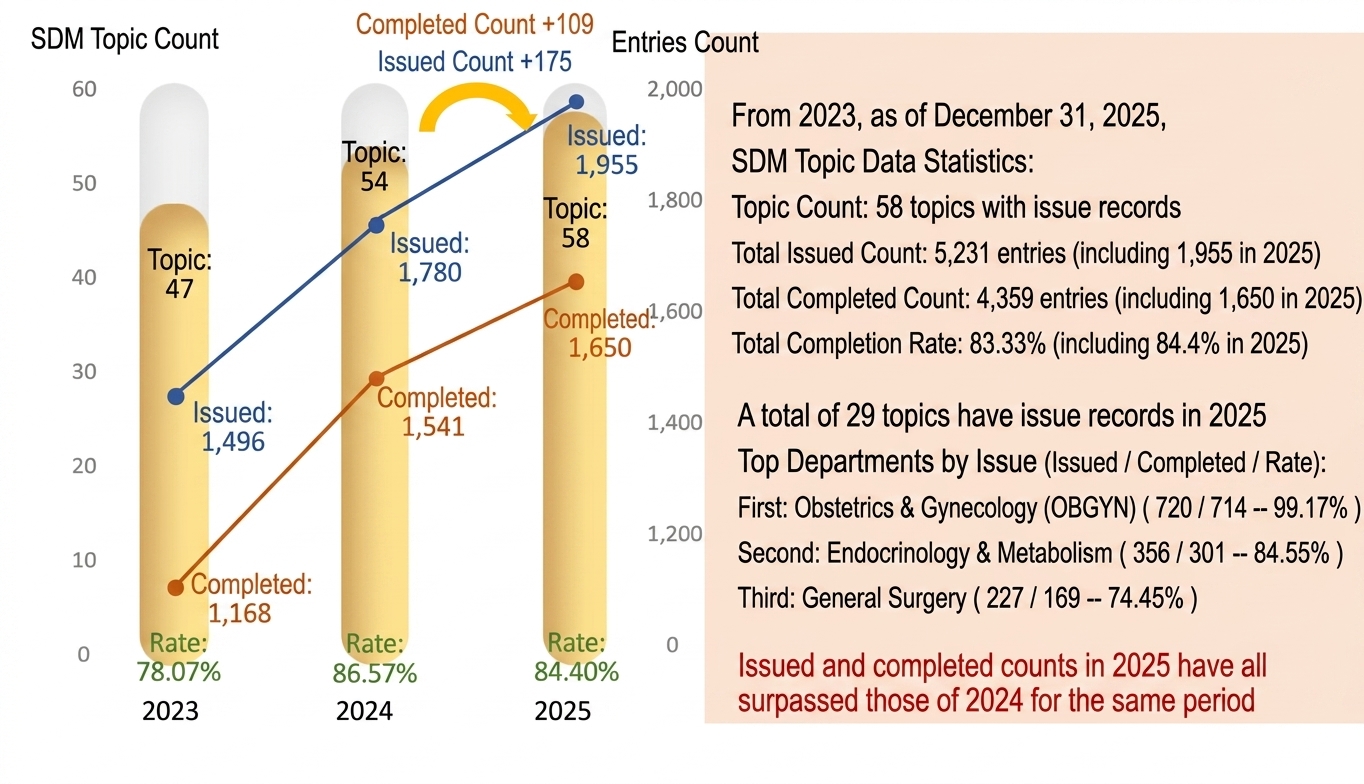 |
| Current SDM Platform status |
Through the implementation of Total Quality Management (TQM) activities, the Nursing Department actively fosters attention to medical safety protocols across departments, thereby improving the overall quality of care. In addition, the satisfaction survey on the nursing service among inpatients is conducted on a yearly basis. In 2025, we surveyed 64 units and distributed 1,611 copies of the satisfaction questionnaire, retrieved 1,402 copies, with the return rate of 87.03%. All survey items achieved an average satisfaction rate of 90%, meeting the established threshold standard. The overall satisfaction rate reached 99.59%.
Moreover, the Hospital also provides diverse feedback channels. The Department of Medical Affair & Planning and the Department of Social Work Office are in charge of receiving opinions that are sent to Superintendent’s Email and Customer Suggestion Box, and the cases are assigned to relevant business management units. The Customer Service Hotline is answered immediately by the customer service staff of the Department of Social Work Office or is transferred to relevant units. Complaints and suggestions with specific contents will be recorded in writing by the Department of Social Work Office and assigned to relevant business management units. In 2025, a total of 6,237 customer opinions or complaints were received, including 2,115 received by the Superintendent’s Mailbox, 243 by the Customer Suggestion Box, and 3,879 by customer service hotline. All of these opinions and complaints were properly handled and responded to in accordance with relevant regulations.
| TVGH’s Multiple Feedback Channels |
| Website for the Superintendent’s Mailbox | https://www6.vghtpe.gov.tw/director/ |
| Locations of Customer Suggestion Box | There are a total of seven locations, including – Next to the service desk on the first floor of the 1st Outpatient Building – On the left wall near the entrance on the first floor of the 2nd Outpatient Building – Next to the escalator on the first floor of the 3rd Outpatient Building – Next to the service desk on the first floor of the Chung-Cheng Building – Next to the service desk on the second floor of the Chung-Cheng Building – Next to the elevator on the first floor of the Shin-Yuan Building – Next to the queue ticket machine at the Admission (Discharge) Service Center on the first floor of the Chang-Ching Building |
| Customer service hotline | (02)2875-7796 |
Advance Care Planning (ACP) Consultation
The Patient Right to Autonomy Act (PRAA) officially came into effect in 2019, and the emphasis lies on the positive significance of the individual’s autonomy in making choices concerning their own life and exercising the right to refuse special medical treatment in accordance with the law. As early as the end of 2018, our hospital proactively established the "Advance Care Planning Center", forming a cross-professional consultation team composed of physicians, nurses, social workers, and psychologists. The Hospital also seeks to actively promote the institutionalization of services to ensure that, before signing a legally binding Advance Decision (AD), individuals fully understand the implication of their own lives.
Advance Care Planning (ACP) is a model in which the individual, their spouse, or at least one family member within the second degree of kinship jointly engages in medical consultation and deliberation with the healthcare consultation team. Through a rigorous ACP consultation process, individuals are guided to reflect on their perspectives on life and identify their core values. Since anyone may encounter illness or an unexpected accident, comprehensive consultation and signing of Advance Decision can effectively protect the rights of the person wishing to be informed, to choose, and to make the most appropriate and dignified arrangements for life.
To accelerate the implementation of patient autonomy, the government has expanded the scope of patients eligible for ACP consultations covered by National Health Insurance starting in May 2025. The Hospital is committed to aligning with national policy, with the aim to form a more mature culture of doctor-patient relationships in Taiwan, so that every individual's dignified vision of the end of life can be freely discussed and fully respected.
.png) |
| Individuals Eligible for NHI-Covered Counseling |
Last Modified: