Smart Transformation of the Hospital
After the completion of the conversion of the hospital’s medical information system to an open architecture, TVGH began the integration of various types of digital data, and various information systems have been upgraded. Now, every aspect of the hospital, from outpatient and inpatient services to emergency care, surgical operation, pharmacy, and administrative operations has been fully digitalized. The comprehensive improvement of smart services not only enhances the patient's medical experience, but also optimizes clinical care processes and reduces the workload of healthcare professionals through the adoption of innovative AI applications.
Medical Information Integration
Benefiting from advances in nuclear medicine technology, AI algorithms can now rapidly process vast amounts of medical imaging data and automatically identify areas of suspected lesions. This technology enables physicians to utilize real-time imaging and in-depth analysis during outpatient consultations to support timely diagnosis, conduct integrated assessments of individual cases, and provide personalized clinical recommendations to help patients select the treatment option best suited to their individual circumstances.
Based on the solid foundation of precise diagnosis and diversified treatment options, the Department of Nuclear Medicine provides the forward-looking one-stop diagnosis and treatment service, allowing patients to complete examinations, diagnoses, planning, and treatment in the same visit. This not only shortens the healthcare process and eliminates the inconvenience of hospitalization or repeated visits, but also significantly reduces their psychological burden, which further enhances the quality of care.
.jpg) |
.jpg) |
.jpg) |
.jpg) |
| Integrated services diagram |
In addition to continuously improving the integration of digital data within the hospital, Taipei Veterans General Hospital also actively participates in the Electronic Medical Record Adoption Model (EMRAM) assessment by the Healthcare Information and Management Systems Society (HIMSS) to promote cross-hospital data exchange and international cooperation. After officially passing the Level 6 Electronic Medical Record Adoption Model (EMRAM) of the Institutional Review Board (HIMSS), TVGH further passed Level 7 certification in December 2025. This signifies that TVGH has reached advanced global standards in several key indicators, including the functional completeness of its electronic medical record system, clinical decision support capabilities, and information security, demonstrating its strong capabilities and proven achievements in smart healthcare.
In addition to continuously improving the integration of digital data within the hospital, Taipei Veterans General Hospital also actively participates in the Electronic Medical Record Adoption Model (EMRAM) assessment by the Healthcare Information and Management Systems Society (HIMSS) to promote cross-hospital data exchange and international cooperation. After officially passing the Level 6 Electronic Medical Record Adoption Model (EMRAM) of the Institutional Review Board (HIMSS), TVGH further passed Level 7 certification in December 2025. This signifies that TVGH has reached advanced global standards in several key indicators, including the functional completeness of its electronic medical record system, clinical decision support capabilities, and information security, demonstrating its strong capabilities and proven achievements in smart healthcare.
To respond to the significant challenges posed by the shortage of nursing workforce, the Hospital is actively utilizing smart technologies to enhance the efficiency of nursing workflows and reduce the workload of nursing staff. As early as 2007, the "Nursing Information Promotion Group" was established, and the nursing information system has been continuously built and improved every year. In 2025, it combined AI technology and introduced four smart nursing functions: "AI-assisted nursing documentation", "Voice input and instant translation", "Technology-assisted medication administration" and "Smart Map for Holistic Nursing Guidance".
The "AI-assisted nursing documentation" developed in collaboration between the Department of Nursing and the Department of Information Management utilizes the Large Language Model (LLM) of Taipei Veterans General Hospital's TVGH Brain and internal data for training. It runs on “TVGH Cloud 1” to ensure that patient data will not be leaked.
The three functions, "Voice input and instant translation", "Technology-assisted medication administration", and "Smart Map for Holistic Nursing Guidance" are upgrades to the "Nursing Handover System" established in 2013. These upgrades aim to create a safer, more precise, and technologically assisted clinical care environment, allowing nurses to focus on patient care and improving the organizational atmosphere so that more outstanding nursing talents are willing to serve at Taipei Veterans General Hospital.
In addition, we also collaborated with ASUS's smart healthcare team to introduce generative AI into clinical record systems in internal medicine, surgery, pediatrics, and obstetrics and gynecology in 2025. This efficiently assists specialists in quickly completing medical records, allowing medical staff to focus more on high-quality patient care. In the future, we will expand the application scenarios in the Hospital and establish standardized processes for generative AI within the hospital to achieve a smarter and more efficient AI healthcare application environment.
Empowering Patients to Return to A New Life
As AI technology continues to advance, it has significantly enhanced the efficiency of healthcare professionals, improved access to healthcare, and facilitated more precise and personalized treatment. However, no matter how powerful AI may be, it cannot replace the empathy, compassion, and sense of responsibility of healthcare professionals. The Hospital understands the importance of embracing both technological innovation and humanistic care, bringing the strengths of both together to create a better future for healthcare in Taiwan.
Restoring Confident Smiles
In the past, although patients with head and neck tumors or craniofacial trauma could survive, they often experienced difficulties in fully recovering their appearance and function after surgery, which adversely affected their postoperative quality of life. Since 2011, TVGH has been a pioneer in introducing digital precision medicine and customized surgical technology. By integrating microscopic reconstruction, dental implants, and digital design, the Hospital has successfully applied computer-aided design (CAD), surgical navigation systems, 3D printing, and customized implants into the postoperative reconstruction of oral, craniofacial function and appearance in patients with head and neck tumors, helping them not only "survive" but also "live well".
Today, digital technologies enable physicians to use computer-aided desCA ign (D) and virtual surgical planning (VSP) to perform precise preoperative simulations to enable more accurate treatment planning. Furthermore, by using customized 3D printing technology, implants and surgical guides that conform to individual anatomical structures can be manufactured, and modular artificial joints may be provided as an innovative reconstruction solution after temporomandibular joint tumor invasion.
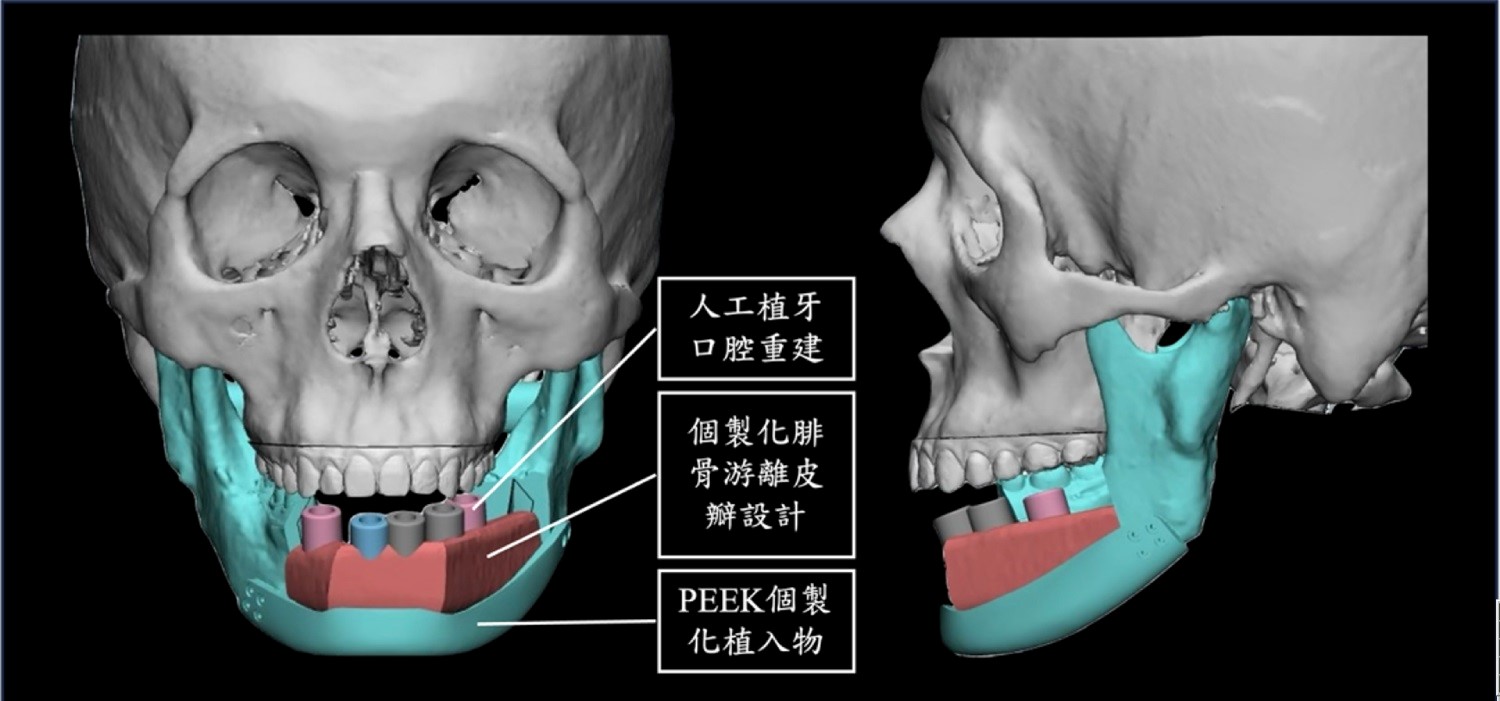 |
| 3D surgical design, combined with personalized implants to reshape the lower face, fibular flap combined with dental implants for oral reconstruction |
The craniofacial region is highly patient-specific, and bone positioning affects not only facial appearance but also dental occlusion and temporomandibular joint function. Therefore, precise skeletal positioning is essential to the success of reconstruction and cannot be adequately addressed enough through bone or plate reconstruction alone. The Hospital combines medical care, technology, and humanistic care, which not only demonstrates Taiwan's international standards in the field of oral and craniofacial reconstruction, but also highlights the power of digital healthcare and interdisciplinary collaboration, creating new treatment opportunities for more patients with head and neck tumors and facial trauma.
Safeguarding Critical Functions
When a blood clot blocks a cerebral blood vessel, every minute of delay can result in the loss of approximately 1.9 million brain cells due to oxygen deprivation. Therefore, Taipei Veterans General Hospital continues to optimize its emergency procedures, striving to complete the administration of recombinant tissue-type plasminogen activator (rt-PA) within the 4.5-hour golden window for rescue. Through systematic process integration, we have achieved the standard of "completing assessment and administering rt-PA injection within one hour of arrival at the hospital", which significantly improves the success rate of treatment. This is not only a demonstration of medical efficiency but also the result of racing against death.
Furthermore, we collaborate closely with Kinmen Hospital of the Ministry of Health and Welfare to establish a comprehensive emergency stroke evacuation system for outlying islands, providing stroke patients in remote areas with the same level of care as those in metropolitan areas. Since 2018, we have successfully assisted 15 stroke patients from Kinmen to undergo EVT at our hospital, and their postoperative recovery has been comparable to that of the patients at TVGH. From first-line emergency rescue to precise image interpretation and thrombectomy techniques; from inter-island patient evacuation system to year-long continuous care, Taipei Veterans General Hospital has comprehensively upgraded its integrated stroke care model through the accumulation of medical technology and clinical evidence, and is committed to enabling every stroke patient to "survive, stand up, and walk home".
Living with Autonomy and Dignity in Later Life
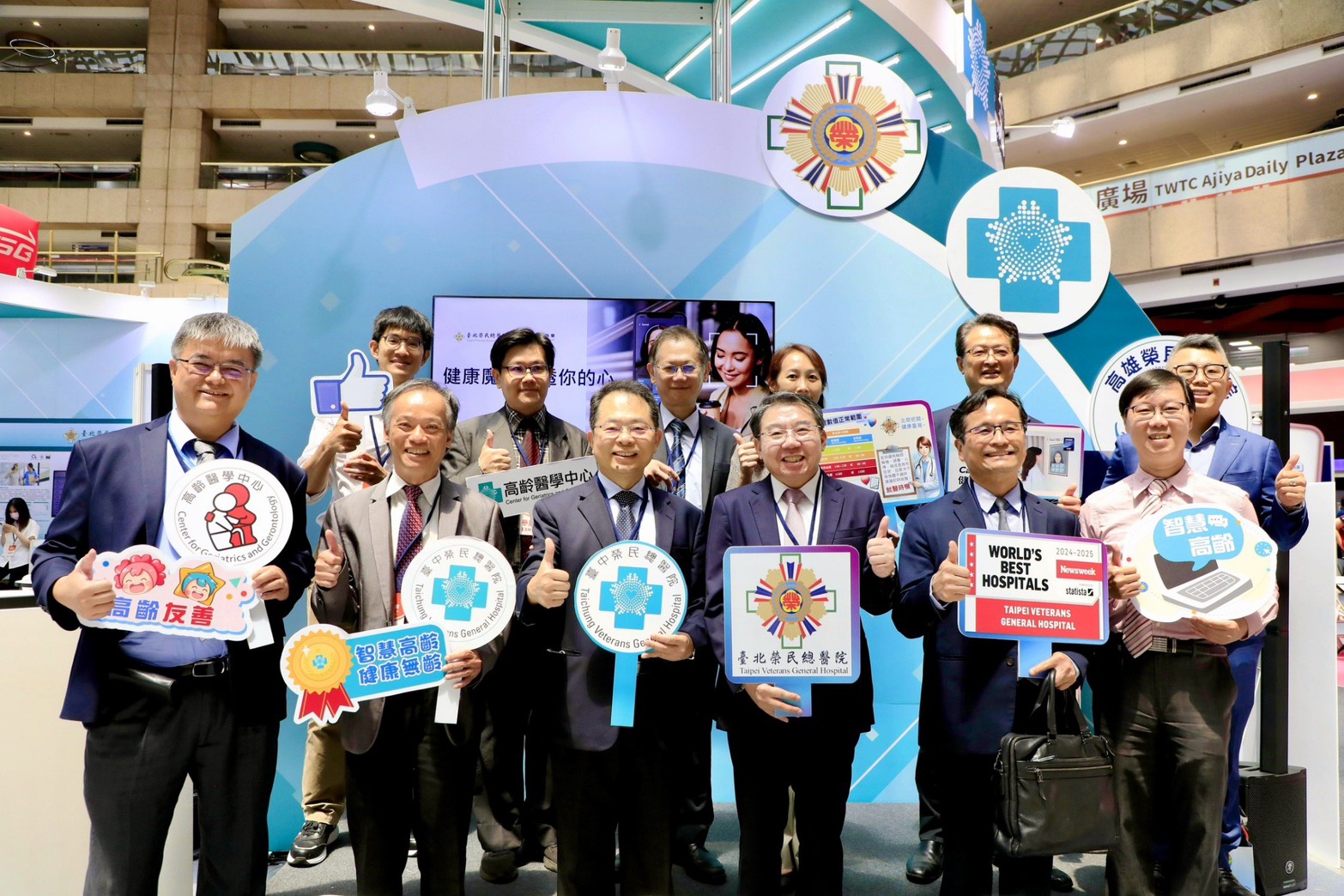
In response to the changes in global population structure, countries around the world are paying attention to the issues of aging, health, and longevity. TVGH, Taipei Municipal Guandu Hospital under its commission, and National Yang Ming Chiao Tung University (NYCU) joined hands together to explore smart healthcare and care solutions. In August, 2025, TVGH and Veterans Affairs Council Medical System jointly participated in the 2nd Healthy Ageing Tech Show to showcase the achievements in promoting healthy aging and elderly care.
 |
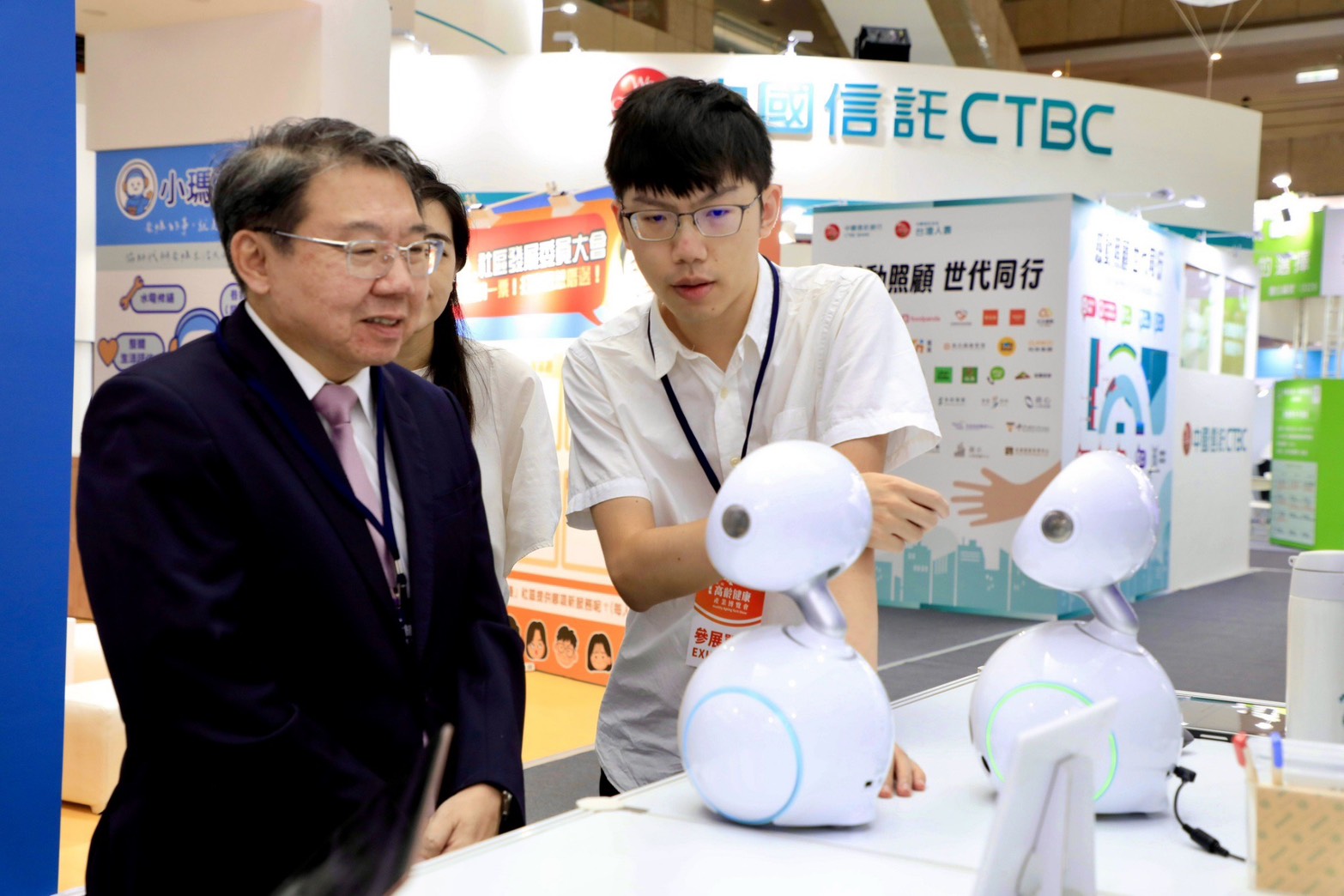 |
| The Veterans General Hospital system jointly participated in the Healthy Ageing Tech Show | AI-Powered Home Healthcare × Smart Measurement Applications |
Taiwan has entered a super-aged society in 2025. The theme of this Healthy Ageing Tech Show was Rejuvenation, focusing on revitalizing and promoting healthy living for the elderly. The Taipei Veterans General Hospital exhibition area focused on innovative technology applications, outlining a comprehensive blueprint for healthy living in a super-aged society. Through cross-domain and cross-professional integration, it constructs a continuous care system from hospitals to communities, from treatment to prevention, enabling the elderly to maintain their health and delay disability in familiar environments, and continue to maintain their autonomy and dignity in life.
| Three Highlights of TVGH Exhibition Area |
| Smart Healthcare | Precision Depression Intervention Center: Brain imaging + next-generation brain stimulation therapy for precise improvement of mood and cognitive health. Smart Mobility Assistive Devices: VR high-fidelity assistive device design, naked-eye suspension prostheses to improve adaptation efficiency and satisfaction. Guardian Smart Healthcare Platform: Real-time multidisciplinary team communication and automated recording of care processes. |
| Home Health Management | AI-Powered Home Healthcare × Smart Measurement: Combining AI and IoT to safeguard health without distance Digital Healthcare for Hypertension: Interactive Data Analysis + Online Health Education Smart sleep monitoring and cognitive function testing apps: Early detection of health risks |
| Comprehensive Long-Term Care Model | Smart Care Log System: Zero omissions in task tracking Fall detection radar: Protecting the privacy and safety of the elderly Integrated medical and elderly care: Multidisciplinary collaboration among medical teams helps older adults maintain or even improve the functional abilities |
Last Modified: